

SUSTAINABLE COMMERCE
SUSTAINABLE COMMERCE
We’re driving growth that’s good for people and the planet.
100% renewable energy supported all eBay operations in 2025.

At eBay, our purpose is rooted in connection — connecting people, communities, and opportunity through ecommerce. Today, that purpose carries a growing responsibility to help shape a more sustainable and resilient future.
In 2025, we continued to integrate sustainability across our business, maintaining the use of 100% renewable energy to support our operations, including data centers, even as our business grew. We also advanced our Climate Transition Plan, establishing a clearer path to reduce emissions across our operations and value chain while supporting our partners and customers in their own climate efforts.
Recommerce remains central to our impact. In 2025, our platform created $5.3 billion in positive economic impact for eBay, up $300 million from 2024, while avoiding 1.6 million metric tons of carbon emissions and diverting 71,000 metric tons of waste. As demand for circular options grows, we are focused on scaling recommerce and making it more seamless and trusted for our global community.
While we are proud of this progress, we know there is more to do. We remain focused on advancing our Climate Transition Plan and continuing to deliver meaningful, measurable impact.
Our Climate Transition Plan
As a global marketplace, eBay plays an important role in helping build a more sustainable future. We take that responsibility seriously, holding ourselves to a high standard for climate action and continuously strengthening our ambitious goals in service of a more sustainable world.
With our SBTi-validated net-zero goal, we aim to reduce emissions across our entire value chain by 90% from a 2019 baseline and neutralize remaining emissions from 2030 to 2045. We’ve also accelerated our 2030 ambition to reduce absolute Scope 3 GHG emissions from downstream transportation and distribution to 27.5%.
Our Climate Transition Plan outlines the actions we will take to achieve net-zero by 2045. It is broken into four decarbonization pathways, organized by impact and timeline, and focused on the factors we can control. Each pathway includes detailed actions and benchmarks as well as the required critical dependencies—including third-party engagement and policy alignment—to help us deliver on our promises.
Please read our Climate Transition Plan for full details, including our key actions and climate risks and opportunities.
We organize our work into four core decarbonization pathways. Together, they create a clear, actionable roadmap grounded in measurable outcomes and aligned with eBay’s evolving business priorities.

Decarbonizing Our Operations

Decarbonizing Emissions From Downstream Transportation and Distribution

Decarbonizing Our Remaining Value Chain

Neutralizing What Remains
Environmental Footprint
A clear understanding of our environmental impact is essential to identifying solutions to reduce it. That’s why we’re committed to tracking our environmental footprint, have set science-based targets using SBTi criteria, and annually disclose our climate-related financial risks and opportunities through the Task Force on Climate-Related Financial Disclosures (TCFD) framework.
Greenhouse Gas Emissions
We report our GHG emissions in accordance with the Greenhouse Gas Protocol, a partnership between the World Resources Institute (WRI) and the World Business Council for Sustainable Development (WBCSD). We set a science-based target using SBTi criteria to reduce Scopes 1 and 2 emissions by 90% by 2030 from our 2019 baseline. Data coverage includes 100% of our operations.
Emissions by Scope
Our corporate footprint is driven primarily by our offices, which account for 64% of our Scopes 1 and 2 emissions. Remaining Scope 1 emissions come from fuel combustion at our facilities and business travel in owned transport modes, for which we acquired SAF certificates in 2025. Notably, our investment in renewable energy has nearly eliminated our Scope 2 footprint. As with most companies, our Scope 3 emissions significantly outweigh our Scopes 1 and 2, and as an online marketplace, the majority of our value chain emissions come from the delivery of products.
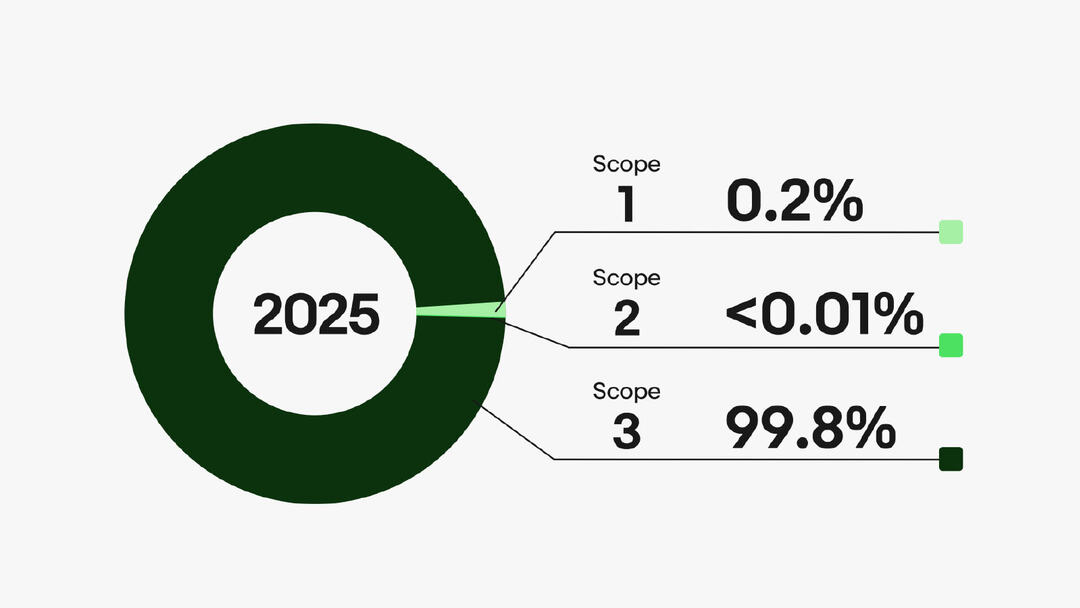
About this chart: Greenhouse Gas Emissions
Pie chart showing the breakdown of our greenhouse gas emissions, with Scope 1 making up 0.2%, Scope 2 making up <0.01% and Scope 3 making up 99.8% of our total emissions. *Market-based
Scopes 1 and 2
In 2025, we rolled out additional energy-saving upgrades, including additional installation of efficient lighting at several U.S. and global locations and the deployment of runtime reductions on data center generators.
We also maintained our reduction in Scope 2 emissions*, supported by our strategic approach to renewable energy procurement and the allocation of offsite bundled Renewable Energy Certificates (RECs) from virtual power purchase agreements (VPPAs) and from our colocation data center providers, as well as a small number of purchased unbundled RECs for global offices. We also allocated VPPA RECs to our data centers, which are the largest energy consumers, and U.S. sites lacking in readily available local renewable electricity solutions. This approach enabled us to uphold our 100% renewable energy goal and RE100 commitment.
To date, energy efficiency strategies and renewable energy procurement have contributed to a 93% overall reduction in our Scope 1 and 2 emissions from our 2019 baseline.
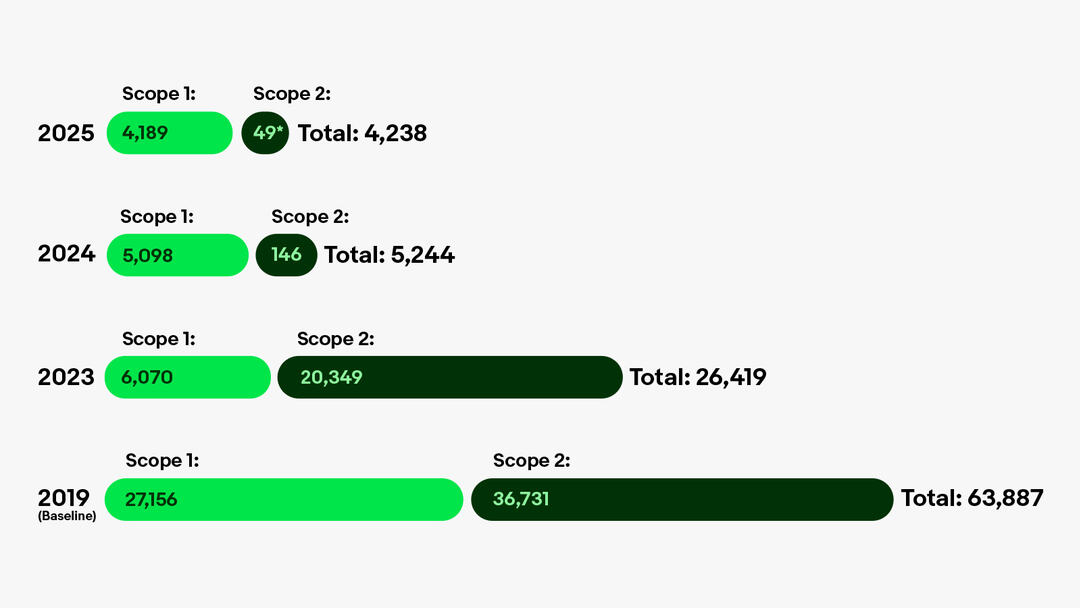
About this chart: Scopes 1 and 2 Emissions
Chart illustrating Scopes 1 and 2 GHG emissions from 2019 to 2025, showing a consistent year-over-year decrease. In 2019, total emissions were 63,887 mtons CO2e (Scope 1: 27,156; Scope 2: 36,731).By 2023, emissions dropped to 26,419 mtons CO2e (Scope 1: 6,070; Scope 2: 20,349). In 2024, emissions decreased to 5,097 mtons CO2e (Scope 1: 4,951; Scope 2: 146). In 2025, emissions decreased to 4,238 mtons CO2e (Scope 1: 4,189; Scope 2: 49*).
Scope 3
In 2025, our Scope 3 emissions were primarily generated through downstream transportation and distribution of items purchased on our platform. Our other significant categories of Scope 3 emissions are purchased goods and services and capital goods, commensurate with annual spend for products such as office supplies, third party services, and software.
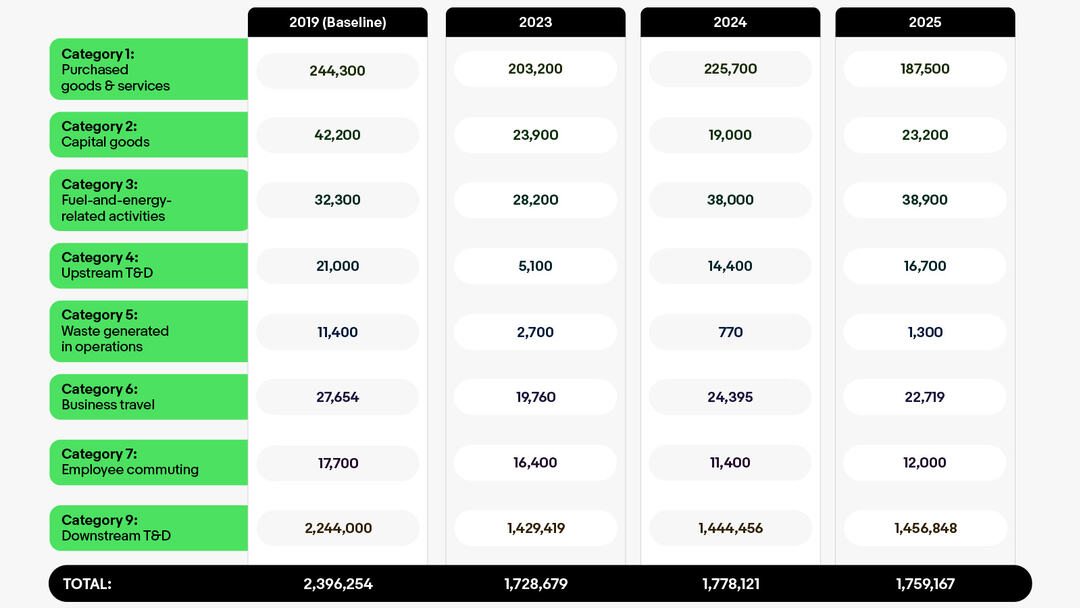
About this chart: Scope 3 GHG Emissions by Category
Chart showing category breakdown of our Scope 3 emissions in 2025 and year-over-year totals beginning in 2019. 2025 contributions include 187,500 mtons CO2e from purchased goods and services, 23,200 mtons CO2e from capital goods, 38,900 mtons CO2e from fuel-and-energy-related activities, 16,700 mtons CO2e from upstream T&D, 1,300 mtons CO2e from waste generated in operations, 22,719 mtons CO2e from business travel, 12,000 mtons CO2e from employee commuting, and 1,456,848 mtons CO2e from downstream T&D.
Scope 3 Downstream Transportation and Distribution (T&D)
In 2025, approximately 83% of our total Scope 3 emissions were generated by the shipping and transportation of items purchased on our platform. The slight increase in emissions from 2024 to 2045 was primarily driven by shipments traveling longer distances and at a higher weight per package on average. Learn more about our efforts to reduce Scope 3 shipping-related emissions in the Shipping Decarbonization Strategy section.
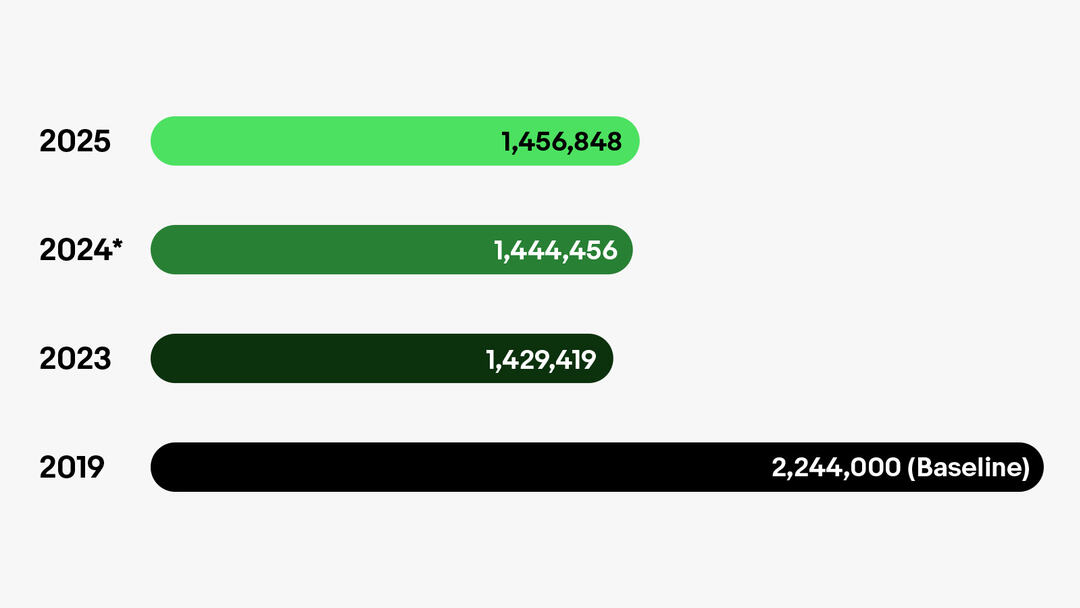
About this chart: Scope 3 Shipping
Chart showing year-over-year changes in Scope 3 Shipping emissions: 2,244,000 mtons CO2e in 2019, 1,429,419 mtons CO2e in 2023, 1,444,456 mtons CO2e in 2024, and 1,456,848 mtons Co2e in 2025.
Energy
Like other tech companies, our largest environmental impact comes from energy consumption in our offices, data centers, and authentication centers. To address this, we are committed to investing in clean energy sources, with a goal to support all our electricity consumption with renewable energy.
Energy Use
In 2025, our energy management team conducted regular site visits to our San Jose headquarters to assess energy efficiency needs and implement energy-saving measures in our building automation and lighting systems. We also migrated to a modern building management system, enabling enhanced monitoring and control of HVAC systems and driving more efficient energy use across the campus. Additionally, four buildings on this campus have received Energy Star® certifications.
Globally, we continue to improve our environmental footprint. In Shanghai, we upgraded cooling systems by replacing underperforming equipment, increasing energy efficiency and reducing wasted power from aging infrastructure. In Bern, Prague, and Dublin, we continued lighting conversions to LED, and in Paris, we implemented centralized lighting controls to better manage energy usage in meeting rooms. In Dreilinden, we added rooftop solar panels to the outdoor Haus am See container for powering its refrigerator and mobile device charging, and in London, we replaced legacy heating infrastructure with a high-efficiency condensed boiler.
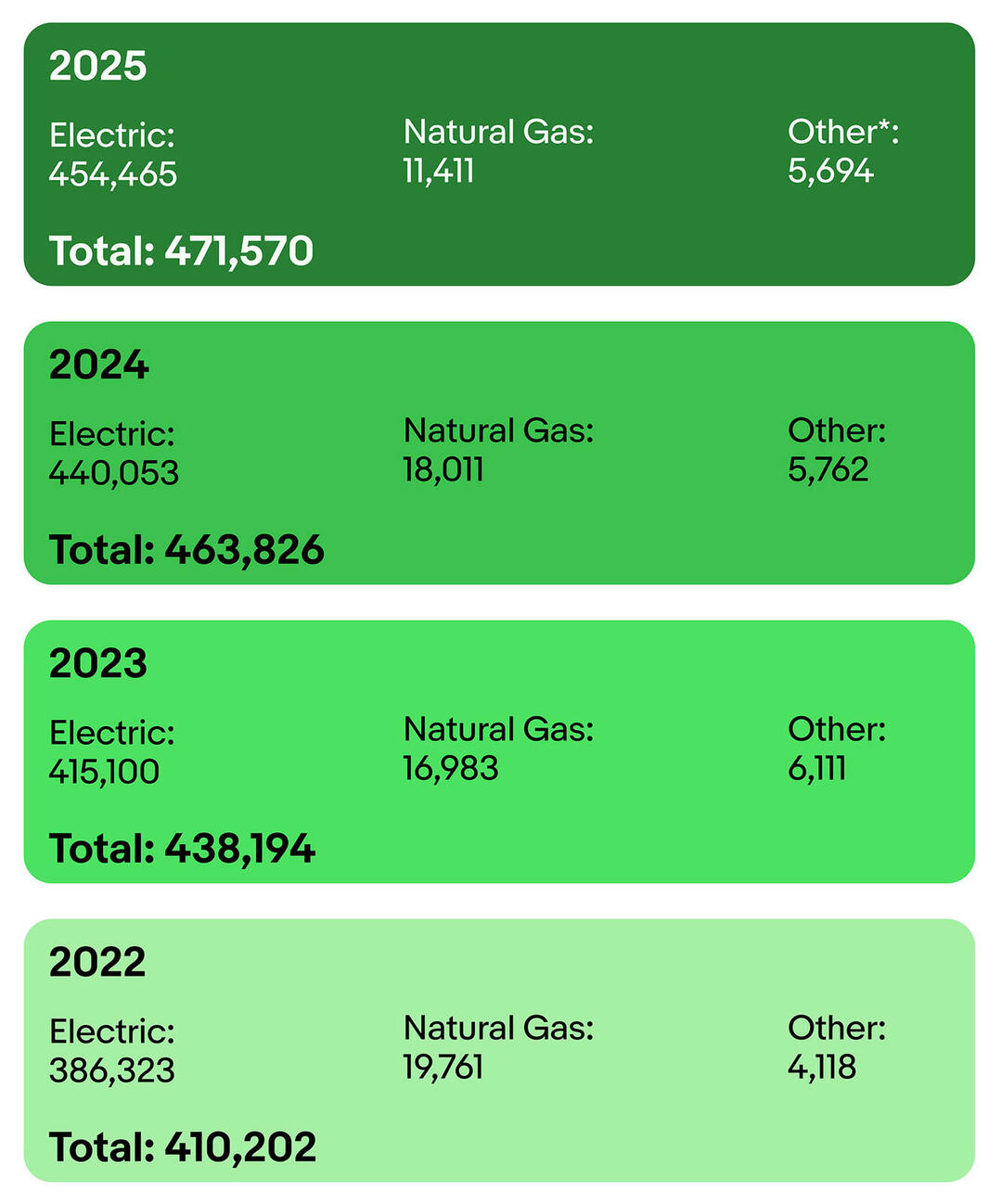
Our Mission Critical Engineering Design & Construction team continues to develop a long-term sustainability plan to significantly cut emissions and water usage while improving operational electrical efficiencies at our data centers, which accounted for 91% of our total energy usage in 2025.
About this chart: Energy Use by Type
Chart showing the breakdown of energy use from 2022 to 2025 by energy type. In 2022, we used 410,202 MWh of total energy: 386,323 MWh of electric power, 19,761 MWh of natural gas, and 4,118 MWh of other energy. In 2023, we used 438,194 MWh of total energy: 415,100 MWh of electric power, 16,983 MWh of natural gas, and 6,111 MWh of other energy. In 2024, we used 463,826 MWh of total energy: 440,053 MWh of electric power, 18,011 MWh of natural gas and 5,762 MWh of other energy. In 2025, we used 471,525 MWh of total energy: 454,465 MWh of electric power, 11,411 MWh of natural gas, and 5,649 MWh of other energy. *Other Energy encompasses diesel fuel and jet fuel
Renewable Energy
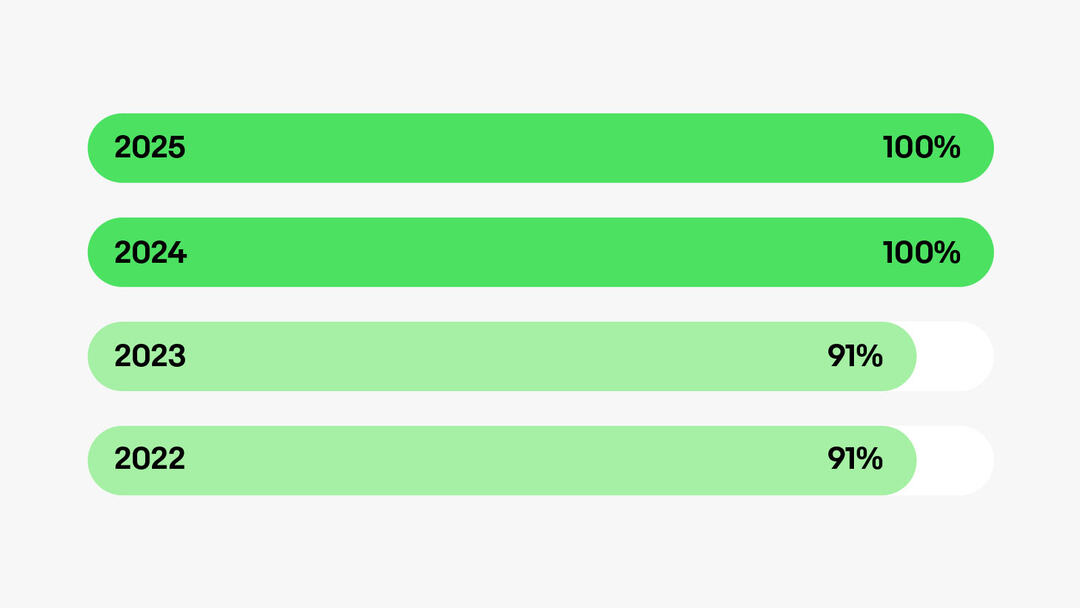
We’re proud to report that our San Jose headquarters — along with eight other offices — now run on 100% renewable energy through their utility providers. We have also invested in virtual power purchase agreements (VPPAs) in Texas and Louisiana, which allow us to support renewable energy projects and obtain clean energy certificates. These VPPAs and improvements to our global offices’ renewable energy procurement strategy, enabled us to maintain our 100% renewable energy and RE100 goal in 2025.
To uphold this progress, we plan to continue to prioritize local green programs and VPPAs when feasible and monitor increases in overall electricity usage.
About this chart: Renewable Energy
This chart shows that eBay-controlled offices, data centers, and authentication centers have increased their electricity supply from renewable energy sources from 91% in 2022-2023 to 100% since 2024.
Water and Waste
We’re continuing to advance water conservation and waste reduction across our global offices.
Water Withdrawal
Water consumption remains a top priority, and we implement water reduction solutions where feasible. In Dreilinden, for example, we installed an energy efficient, integrated water faucet system in a primary break room to replace kettles and water dispensers. At our owned data centers, we have implemented an advanced chemical and filtration treatment system to increase evaporative cooling cycles and high-recovery water treatment systems to reduce raw water intake requirements.
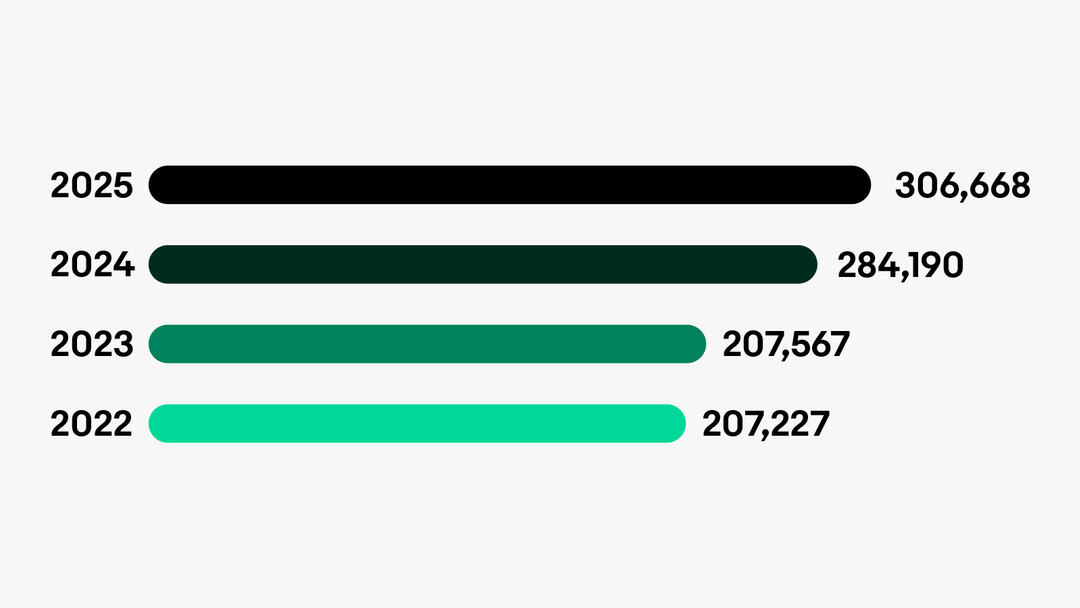
In 2025, we took meaningful steps to increase the scope of reporting on water. This improved methodology includes estimates that enable us to quantify our full operationally-controlled corporate footprint and provides a more complete picture of our water utilization. We are assessing this baseline data and ways in which we can improve water efficiency, particularly in locations with high water usage based in areas of high water stress.
About this chart: Water Consumption
Chart showing changes in water withdrawal, from 207,227 m3 in 2022, to 207,567 m3 in 2023, and to 284,190 m3 in 2024, and 306,668 m3 in 2025.
Waste Diversion
We remain committed to reducing the amount of waste that leaves eBay-owned sites. At our San Jose headquarters, we use a socially and environmentally responsible food service provider, Bon Appétit, and have implemented its WasteNot™ program to monitor and optimize waste streams in our cafeteria.
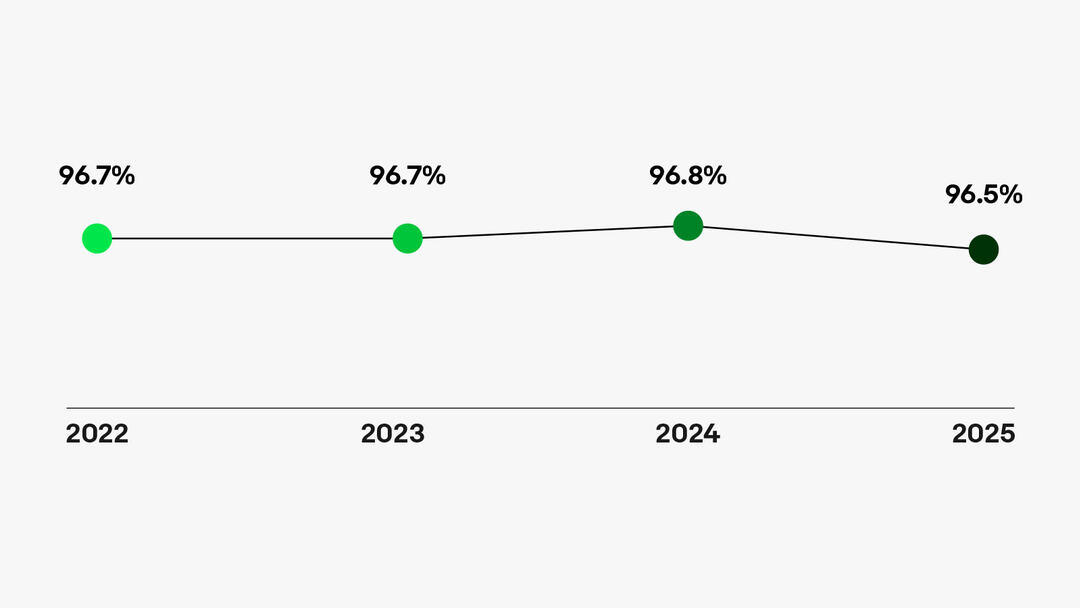
We have maintained a high waste diversion rate across all operations at headquarters and continue to refine our waste data collection process and expand reporting to additional global sites.
About this chart: Waste Diversion
Chart showing our waste diversion rate, which was 96.7% in 2022 and 2023, 96.8% in 2024, and 96.5% in 2025.
Global Sustainability Initiatives
We partner with several organizations to advocate for climate action and advance sustainable business practices.
eBay Germany is finding innovative ways to reduce emissions, protect the environment, and boost the local economy. Here are just a few.
Our newly-launched Green Team Germany employee group organized eBay Earth Day in 2025. Activities included their annual spring campus clean-up, a bicycle repair pop-up to encourage bicycle commuting, and a styling session featuring refurbished Dyson items. They also showcased the solar panels which provide some of the power for a group meeting space.
The Green Team also led a second campus clean-up as part of the office’s “Family Day” celebration in September, inviting children to participate as part of a scavenger hunt activity.
eBay’s memberships include:
- Corporate Energy Buyers Association (CEBA)
- Ceres Policy Network’s Business for Innovative Climate and Energy Policy (BICEP) coalition
- Ellen Macarthur Foundation
- RE100
- Utah Clean Energy Coalition
- Ecommerce Transportation Decarbonization Working Group of the Smart Freight Center
- GMA Trucking
Recommerce
Recommerce is proof that sustainability and economic opportunity can go hand in hand. When we connect buyers and sellers through the resale of pre-loved and refurbished goods, we’re also reducing waste, conserving resources, and cutting greenhouse gas emissions.
In 2025, we are excited to announce the achievement of our five-year recommerce goals, spanning impacts to economic impact, climate, and waste.
By empowering the sale of pre-owned and refurbished goods on the eBay platform, we exceeded our 2021-2025 Recommerce Goals:
Economic Impact Goal:
Drive $22 billion in positive economic impact
Status: Exceeded
Achieved almost $25 billion in positive economic impact.
Climate Impact Goal:
Avoid 8 million metric tons of carbon emissions
Status: Exceeded
Avoided nearly 8.2 million metric tons of carbon emissions, equivalent to taking nearly 2 million cars off the road for a year.
Waste Impact Goal:
Divert 350,000 metric tons of waste from landfills
Status: Exceeded
Diverted over 360,000 metric tons of waste, equivalent to almost 2.7 million blue whales in weight.
Recommerce represents a continued area of growth for our company and an opportunity to continue making an impact for our users and our planet. To reinforce our commitment to recommerce, we will announce new goals in the near future and are working diligently to update our methodology to capture timely market insights and improve accuracy for our reporting. We look forward to sharing these details in future reporting.
Recommerce Report
Recommerce has been central to eBay’s marketplace since day one.
Recommerce continues to grow in popularity, reshaping consumer behavior as a result. According to eBay’s 2025 Recommerce Report, 89% of surveyed consumers said they expected to spend the same amount or more on pre-loved goods as in the previous year, and 69% feel good about giving items a second life when buying pre-loved goods.
Consumers reported five primary reasons they engage in recommerce:
- 81% shop pre-loved to save money
- 45% cite sustainability and environmental benefits
- 37% are seeking specific items they can’t find new
- 36% are looking for a unique or collectible item
- 17% dislike fast fashion
Read eBay’s 2025 Recommerce Report to learn more.
More than 40% of our sales come from pre-owned and refurbished items.
eBay Refurbished
We support a circular economy through our eBay Refurbished program, which helps extend product lifecycles and reduces the need for environmentally costly new manufacturing.